Asia Post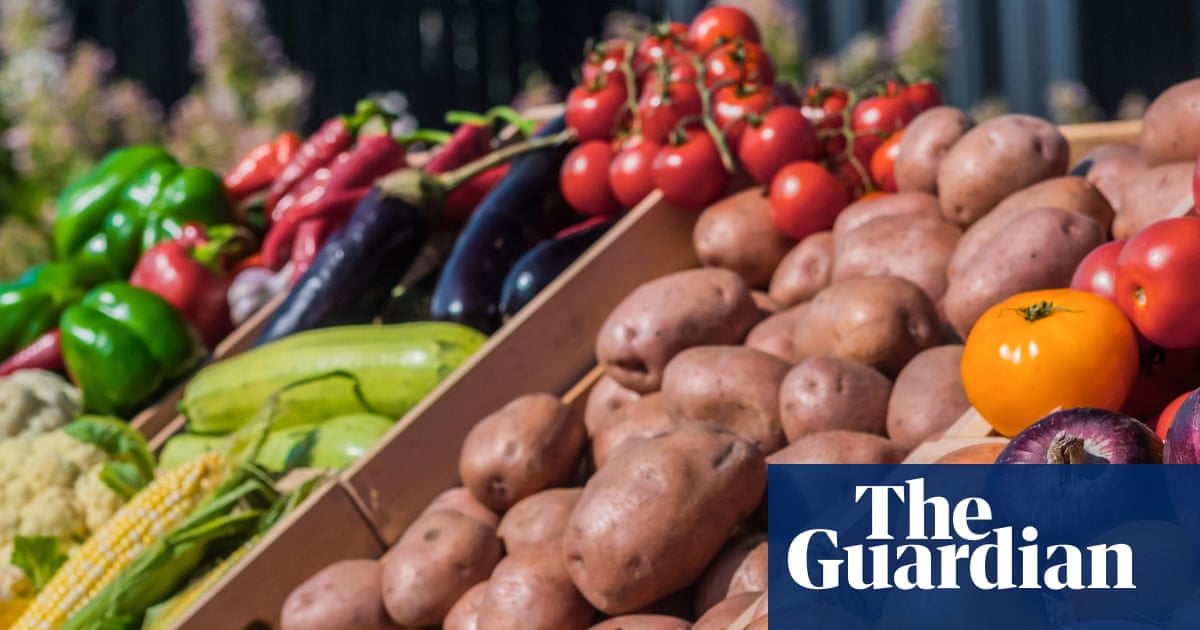
A new report from the Centers for Disease Control and Prevention (CDC) reaffirms that adults are more likely to eat fresh fruits and vegetables as their income increases. The data brief comes as Republican cuts to food assistance programs, colloquially called “food stamps”, have led enrollment to “ plummet ”. Changes to US dietary guidelines, led by health secretary Robert F Kennedy Jr , have also made a government-recommended diet more expensive.
A new “food pyramid” released in January emphasized animal protein, fresh fruit and vegetables, all of which cost more, according to studies. “Particularly for people with lower incomes this is really infeasible, especially when millions of people – and what will be probably millions of children – are going to lose access to a really critical benefit that keeps people food secure,” said Priya Fielding-Singh, director of policy and programs at the George Washington University Global Food Institute. The data brief from CDC’s National Center for Health Statistics found that more than nine in 10 Americans ate any vegetable on a given day and about 7 in 10 ate any fruit.
The data brief covered adults older than 20 from August 2021-2023. However, the percentage of adults who ate any vegetables, “dark green vegetables, red or orange vegetables, and other vegetable types increased with increasing family income” – with deep divides between the low-income and middle class. For instance, the percentage of adults who ate any fruit on a given day was 56% for people living on less than 130% of the federal poverty level ($20,748 for a single adult).
By contrast, 76% of people who earned 350% of FPL ($55,860) ate any fruit. Similarly, a single person who earned $55,860 was almost twice as likely (38% versus 19.6%) to eat berries, citrus and melons compared to the poorest people included in the study. The same was true of vegetables.
Although most Americans ate a vegetable in a day, only 29% of the lowest income Americans in the data brief ate a dark green vegetable, compared to 42% for the highest income. This is not surprising. Years of studies have shown that people with less money and time spend more on energy-dense, shelf-stable packaged foods – foods that fill you up and don’t spoil.
The relationship between food and income was known even 91 years ago, when a study of diet and income in the UK found that nearly everyone ate potatoes and bread, but the poorest in society bought far less milk, eggs, vegetables and fruits. “A review of the state of health of the people of the different groups suggests that, as income increases, disease and death-rate decrease, children grow more quickly, adult stature is greater and general health and physique improve,” Sir John Boyd Orr wrote in 1935 . Multiple contemporary studies have pointed out the same tension.
A recent study by University of Washington researchers found foods recommended by Kennedy’s health department cost a mean of $15.82 per day . The average Snap household is two people and receives $177 per month , or about $3 per day per person. About 39% of Snap beneficiaries are children.
Republican cuts to food assistance programs in the “Big Beautiful Bill” act mean that fewer Americans are getting these benefits. Republicans required states to pay toward food benefits for the first time, barred certain legal immigrants (particularly people in the US on asylum and certain trafficking survivors) from food assistance programs, and required older people to submit to work requirements, raising the age for people required to prove they work 20 hours a week from 54 to 64. Republicans also required states to pay a share of food assistance benefits for the first time in the program’s history, which could result in hundreds of millions of dollars of new costs in some states, according to the Center for Budget and Policy Priorities .
All of this is contributing to a swift decline in food assistance rates. Food assistance enrollment fell 13% nationally between May 2025 and May 2026 , according to an Associated Press analysis. In some states the declines have been even more dramatic, such as Florida, Georgia, Louisiana and Nevada.
In these states, proponents of welfare cuts argue that people are no longer eligible because they’re earning more money. Republicans also imposed new documentation requirements, making it more likely that eligible people will fail to complete paperwork. In Arizona, some analysts said this appears to be contributing to the 47% reduction in enrollees in the state, where new documentation requirements are running headlong into severe staff shortages .
Pamela Lachman, chief strategy officer for the Center for Employment Opportunities (CEO), a group that works with people recently released from jail and prison, said that the administrative burdens simply do not consider the reality of daily life for people seeking food assistance. CEO’s own part-time work programs are often difficult to count as work for the purposes of food assistance, because hours can be irregular. “They have requirements to do their parole supervision, they’re trying to find a place to live – all of those things mean your work might be inconsistent,” said Lachman.
“If you immediately need to start proving you’re working 20 hours a week, if not more, that’s very challenging to do.” Even as fewer Americans access food benefits, it is likely the government will have less insight into food insecurity. In September 2025 , the US Department of Agriculture announced it would no longer sponsor the Food Security Supplement in the US Census Bureau’s annual survey, ending data collection that had occurred annually since 1995.
Source: The Guardian